One of the main concerns for travellers visiting Morocco is mobile coverage. Will I have internet in the desert? Will my eSIM work in rural areas? In this article, we tell you exactly where you can expect good signal and where you should prepare to disconnect a little.
The good news is that Morocco has a fairly developed telecommunications infrastructure. Major cities and tourist routes have excellent 4G/LTE coverage, and the network continues to expand to more remote areas every year.
Our Morocco eSIM connects to the Orange Morocco network, the operator with the most extensive and reliable coverage in the country. This means you will have access to the best available network during your trip, regardless of the area you visit.
Orange coverage in the main tourist areas
Connected to Orange Morocco, the country's best network.
Major cities: excellent coverage
In Morocco's major cities, you will have 4G LTE coverage without any problems. Speeds are comparable to what you would find in any European city, allowing you to browse, make video calls and upload content to social media without restrictions.
Cities with the best coverage include:
- Casablanca: The economic capital has the best infrastructure in the country.
- Rabat: As the administrative capital, it has premium coverage.
- Marrakech: The quintessential tourist destination has excellent 4G throughout the city.
- Fez: Even inside the ancient medina you will find good signal.
- Tangier: Port city with modern infrastructure.
- Agadir: Beach resort area with full coverage.
Coastal areas: connected by the sea
Morocco's Atlantic and Mediterranean coasts enjoy very good coverage. Cities like Essaouira, El Jadida, Asilah and Tetouan have stable 4G. Even the most popular beaches usually have good signal.
If your trip includes surfing in Taghazout or relaxing on the beaches of Saidia, you will be able to share your photos and videos without any problem. Coverage in these tourist areas is well optimised for visitors.
The Atlas Mountains and mountainous areas
The Atlas Mountains present a more variable scenario. In the main valleys and towns like Imlil or Ouarzazate, you will find reasonable 3G and 4G coverage. However, as you ascend to more remote areas, the signal may weaken.
For trekking excursions in the High Atlas, it is recommended to:
- Download offline Google Maps before setting out.
- Save important accommodation information.
- Not rely on your phone for navigation on high mountain routes.
The Sahara Desert: the big question
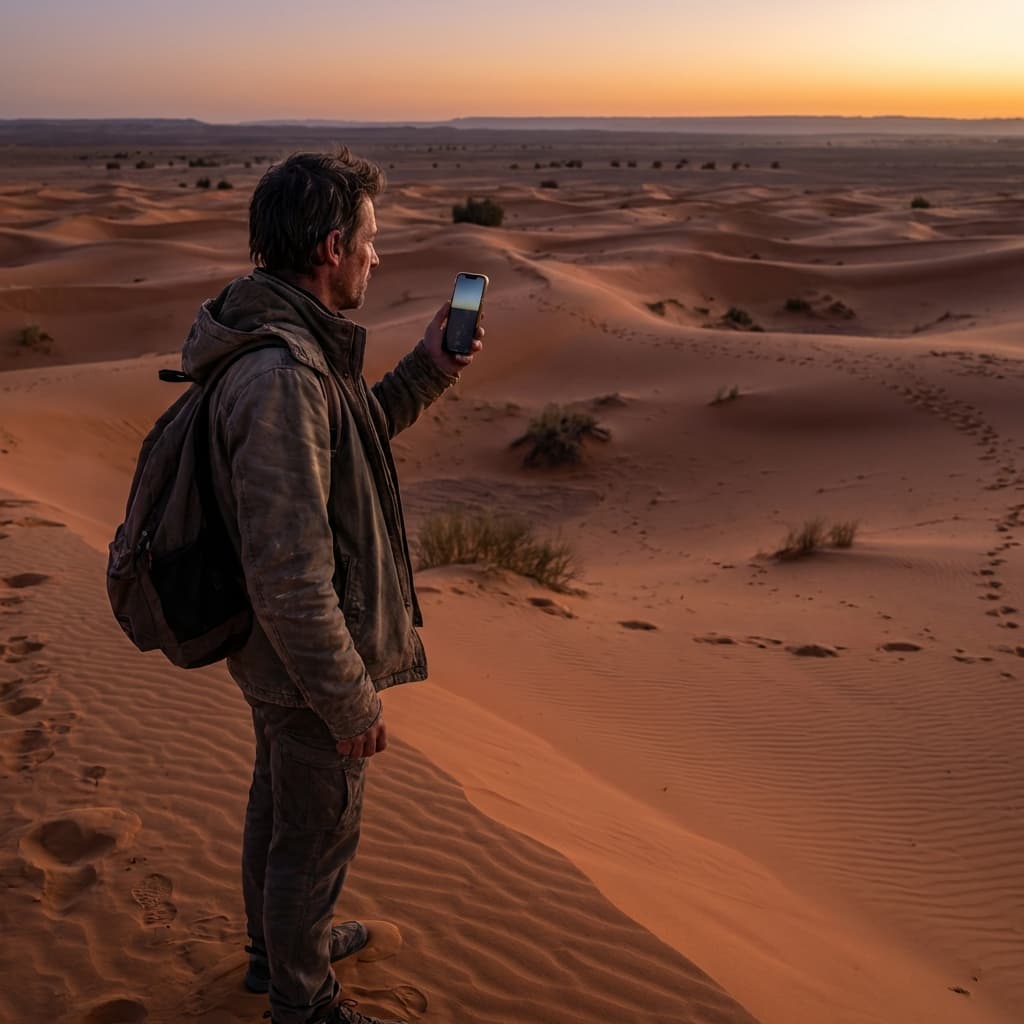
This is probably the most frequent question: is there coverage in the desert? The answer is it depends on where exactly.
In tourist desert destinations like Merzouga (Erg Chebbi) and Zagora (Erg Chigaga), there is 3G coverage and in some spots 4G. You will be able to use WhatsApp, check maps and upload photos, although perhaps with slightly less speed than in the cities.
However, if you venture deep into the desert, away from population centres, you will find areas without coverage. The most remote camps may have no signal, which many travellers consider part of the disconnection experience.
Tips to maximise your coverage
Regardless of your route, these tips will help you make the most of your eSIM in Morocco:
- Enable roaming: This is essential for the eSIM to work correctly.
- Restart your phone: If you change areas and lose signal, a restart can help.
- Airplane mode: Use it and deactivate it to force a network reconnection.
- Download offline content: Maps, music and podcasts for areas without coverage.
In summary, Morocco offers very acceptable mobile coverage by regional standards. With an eSIM connected to Orange Morocco, you will have the best possible connectivity experience during your trip.